Florida Keys
Bahia Honda State Park
Turquoise shallows, sandy beaches, and the iconic Old Bahia Honda Bridge make this Lower Keys park a standout stop for families, nature lovers, and road-trippers.
Local history
A Bridge Through the Keys
Bahia Honda sits near Mile Marker 37 on Big Pine Key’s western side, where the Overseas Highway crosses a chain of low islands, mangrove edges, and clear channels. The name is commonly translated as “deep bay,” a fitting description for a place shaped by water from every direction. Long before it became a state park, these islands were part of the traditional homeland and travel routes of Indigenous peoples, including the Calusa and other Native communities whose knowledge of Florida’s coasts was built around fishing, shellfish, seasonal movement, and shallow-water navigation.
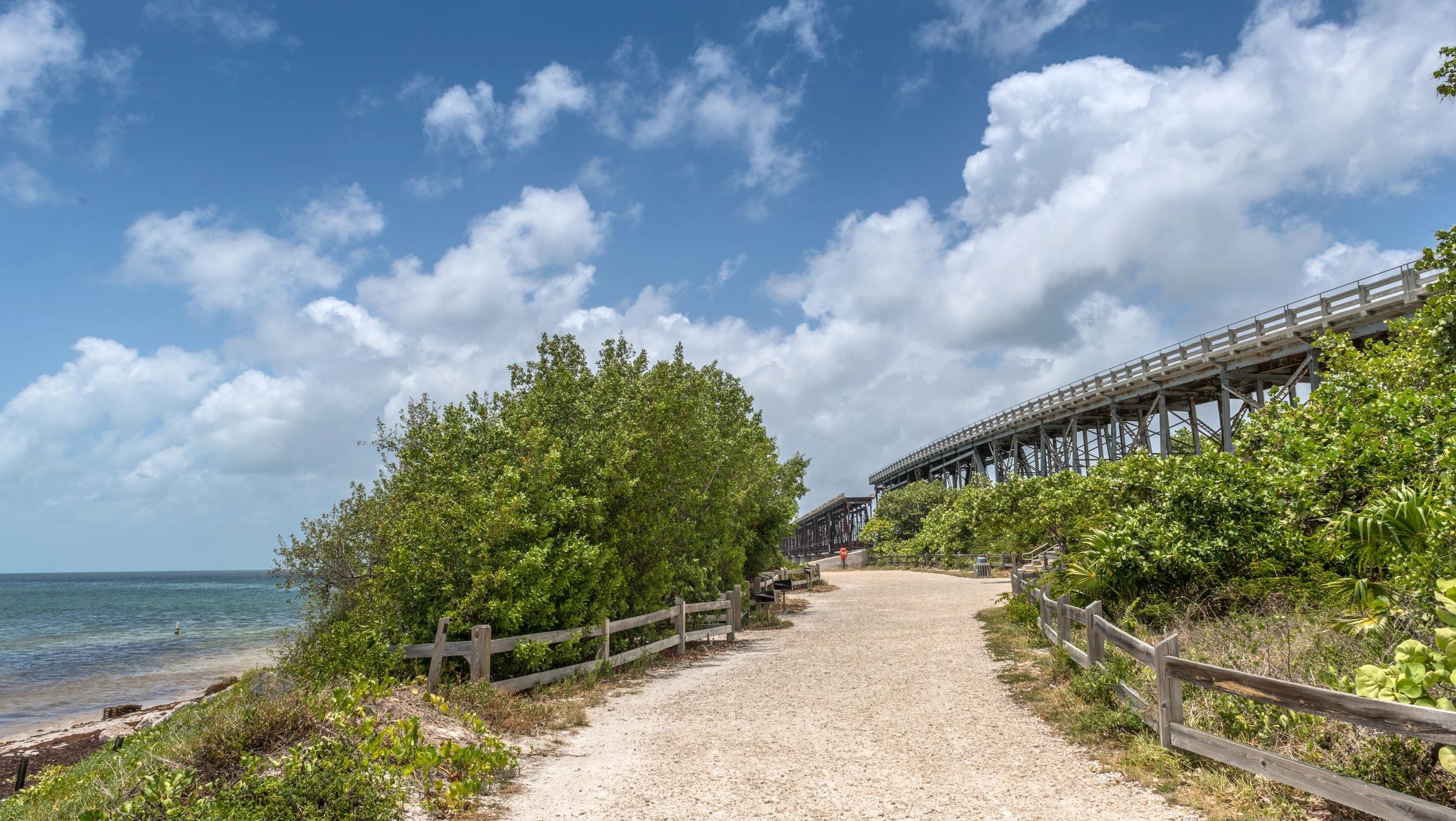
In the early twentieth century, Bahia Honda became closely tied to one of Florida’s boldest engineering stories: Henry Flagler’s Overseas Railroad. The railroad extended the Florida East Coast Railway across the Keys toward Key West, linking islands that had previously been reached mainly by boat. The Bahia Honda Bridge, completed as part of that route, rose high above the channel and became one of the most dramatic structures on the line. Its distinctive steel truss silhouette remains a visual landmark, even though the original rail era is long gone.
The Labor Day Hurricane of 1935 devastated the Upper and Middle Keys and severely damaged the railroad. Rather than rebuild the rail line, the route was adapted for automobiles, helping create the Overseas Highway that visitors drive today. The old bridge at Bahia Honda was later bypassed by a newer road bridge, but its preserved span still tells the story of the Keys’ transformation from isolated islands to a connected island road trip. Looking up at the bridge is one of the park’s most memorable reminders that this beach landscape is also a transportation and community history landscape.
Florida established Bahia Honda State Park in 1961, protecting a rare combination of sandy shoreline, seagrass habitat, tropical vegetation, and historic views. The park’s beaches are especially notable because many Keys shorelines are rocky, narrow, or lined with mangroves. Here, visitors find a more classic beach-day setting without losing the wild, salt-air character of the Lower Keys. The park continues to balance recreation with resource protection, so conditions, access points, and facilities can change as restoration work and weather require.
Things to do
Build a Beach Day
Bahia Honda is easy to enjoy at your own pace. Start with the water, add a short walk or paddle, then leave time to watch the light change across the channel. Bring sun protection, drinking water, reef-safe habits, and a flexible plan: wind, tides, wildlife protection, and park operations all influence the best place to spend the day.
Swim and Beachcomb
The park’s sandy areas and shallow, clear water are the main draw for many visitors. Choose a calm day for floating, wading, and relaxed family time near shore. Walk the wrack line for shells and sea-life clues, but leave living creatures and natural finds where they belong.
Paddle and Snorkel
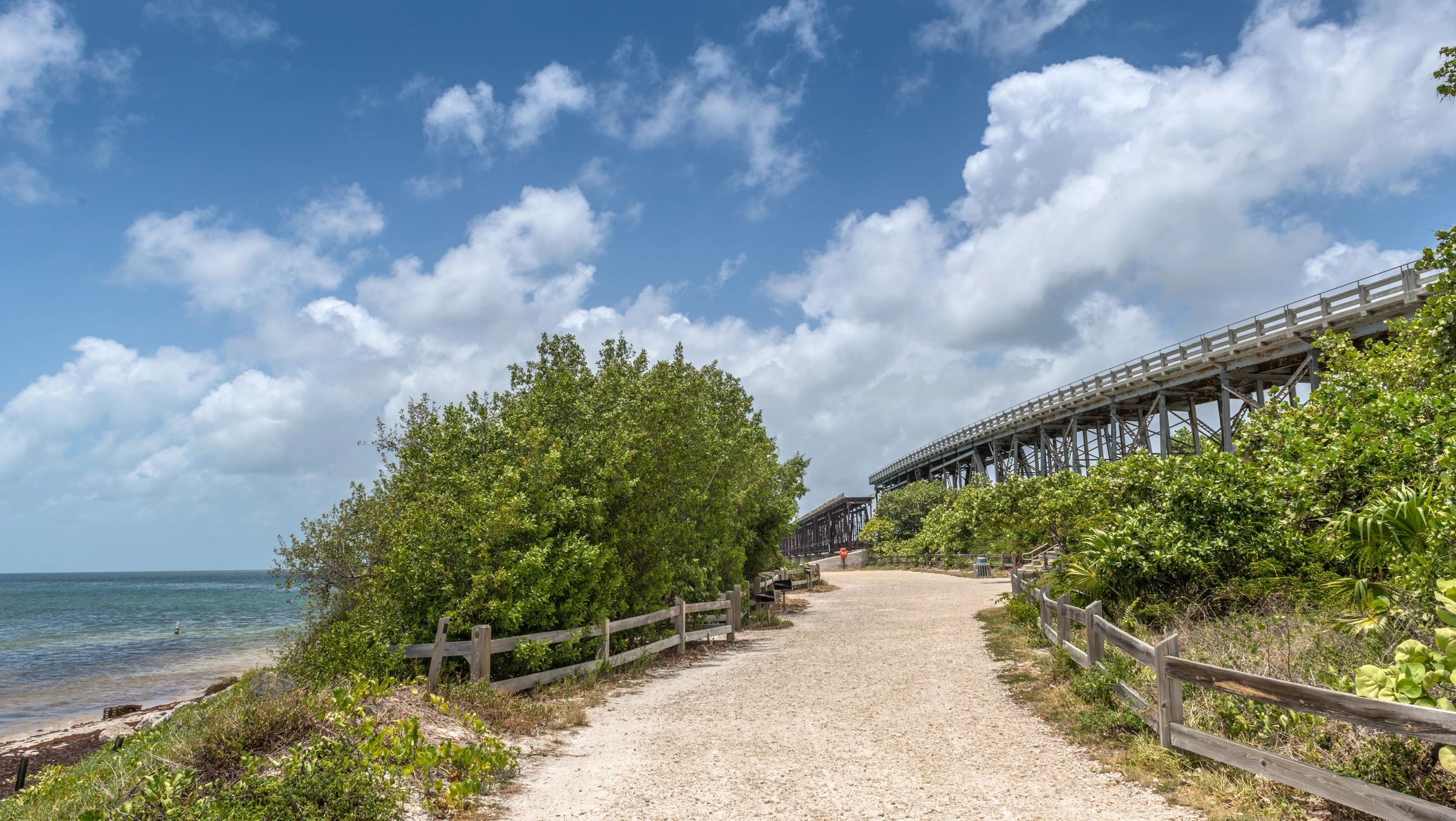
Kayaking, paddleboarding, and snorkeling are popular ways to experience the park’s water when conditions allow. Stay aware of boat traffic, wind, currents, and marked areas. Visibility can vary, so treat a snorkel outing as a bonus rather than a guarantee and never stand on coral or seagrass.
Walk and Watch Wildlife
Bring binoculars for shorebirds, wading birds, and changing views over the water. Short walks around the park reveal tropical plants, mangrove habitat, and bridge viewpoints. Sunrise and late afternoon are especially rewarding for photography, cooler temperatures, and a quieter feel.
For a fuller Lower Keys day, pair the park with a scenic drive through Big Pine Key and nearby islands. The surrounding area is known for its laid-back pace, small local businesses, and opportunities to spot Key deer from a respectful distance. Keep wildlife wild: do not feed animals, drive slowly in signed areas, and give every animal plenty of space. If you are camping or planning a long visit, reserve early and check the official park information before you leave home, especially during winter and holiday periods.
Annual events
Seasonal Reasons to Visit
Bahia Honda is a destination first and an event venue second, so the most dependable “annual events” are the seasonal rhythms that bring the Lower Keys to life. Winter and early spring are the busiest months, when dry weather, comfortable temperatures, and school breaks make beach days especially popular. This is also a prime time for ranger-led programs, guided walks, and nature talks when they are scheduled. Program calendars vary by year, and some activities require registration, so check the official park calendar close to your visit.
Spring brings migrating birds, bright water, and a lively Keys calendar. Visitors may find community art events, seafood celebrations, fishing tournaments, and island festivals in nearby towns from Marathon to Key West. The annual Seven Mile Bridge Run, typically held in spring, is one of the region’s best-known road-race traditions and draws attention to the dramatic Overseas Highway corridor. It is not held inside Bahia Honda State Park, but it is a memorable example of the local culture and scenery that make a Lower Keys trip feel special.
Summer is warm, sunny, and often quieter outside holiday weekends. Families come for long beach days, paddling, camping, and early-morning wildlife watching. Afternoon thunderstorms are common, and hurricane season runs from June through November, so build weather checks into every plan. Around Independence Day, the Keys host community celebrations and fireworks in various locations; traffic and lodging can be busier than usual. Park access and water conditions may change quickly during storms, so use official alerts rather than relying on a fixed itinerary.
Fall offers a slower, more local-feeling window between summer heat and winter crowds. It can be a great time for photography, fishing, and uncrowded beach walks, though tropical weather remains possible. In late fall and winter, holiday boat parades, lighted-boat events, and seasonal gatherings appear throughout the Keys. These celebrations are generally hosted by nearby communities rather than the park itself, but they pair well with a Bahia Honda day trip when you want to combine natural scenery with local tradition.
For every season, plan around the park’s current hours, entry capacity, and any restoration or facility notices. Arriving early is often the simplest way to secure parking and enjoy calmer water. If a ranger program or community event is the centerpiece of your trip, confirm the date, location, accessibility details, and weather policy directly with the organizer. That little bit of planning helps preserve the easygoing, family-friendly feel that makes Bahia Honda so memorable.
Plan smart
Make the Most of Bahia Honda
Bahia Honda rewards visitors who slow down. Pack a picnic, bring reusable water bottles, and allow time for the bridge views as well as the beach. Wear water shoes if you plan to explore uneven shoreline areas, keep an eye on children near changing currents, and follow posted guidance for swimming, snorkeling, and wildlife. The Keys are a fragile island environment, so take all trash with you, use designated paths, and avoid disturbing dunes, seagrass, nesting areas, and marine life.
The park is also a great starting point for exploring the wider Florida Keys. Continue toward Sombrero Beach for another family-friendly stop, or use the Florida Keys guide to compare more island beaches. Whether your ideal day is a quiet swim, a paddle beneath a big blue sky, or a photo stop with a piece of Florida history in the background, Bahia Honda State Park offers a classic Keys experience with room to make it your own.